Streaming Platforms Face Backlash Over Holocaust-Themed Film Content
Controversies surrounding Iranian streaming platforms have intensified following the broadcast of films centered on the Holocaust, sparking debates about cultural oversight and content regulation. The issue gained traction after Filmnet aired A Real Pain, directed by Jesse Eisenberg, which explores Jewish identity and historical trauma. Shortly afterward, Filimo came under fire when its “Filimo Treasure” quiz mistakenly labeled Iraq’s Popular Mobilization Forces as a terrorist group, prompting a public apology attributed to a “momentary glitch.”
Pattern of Holocaust-Centric Content
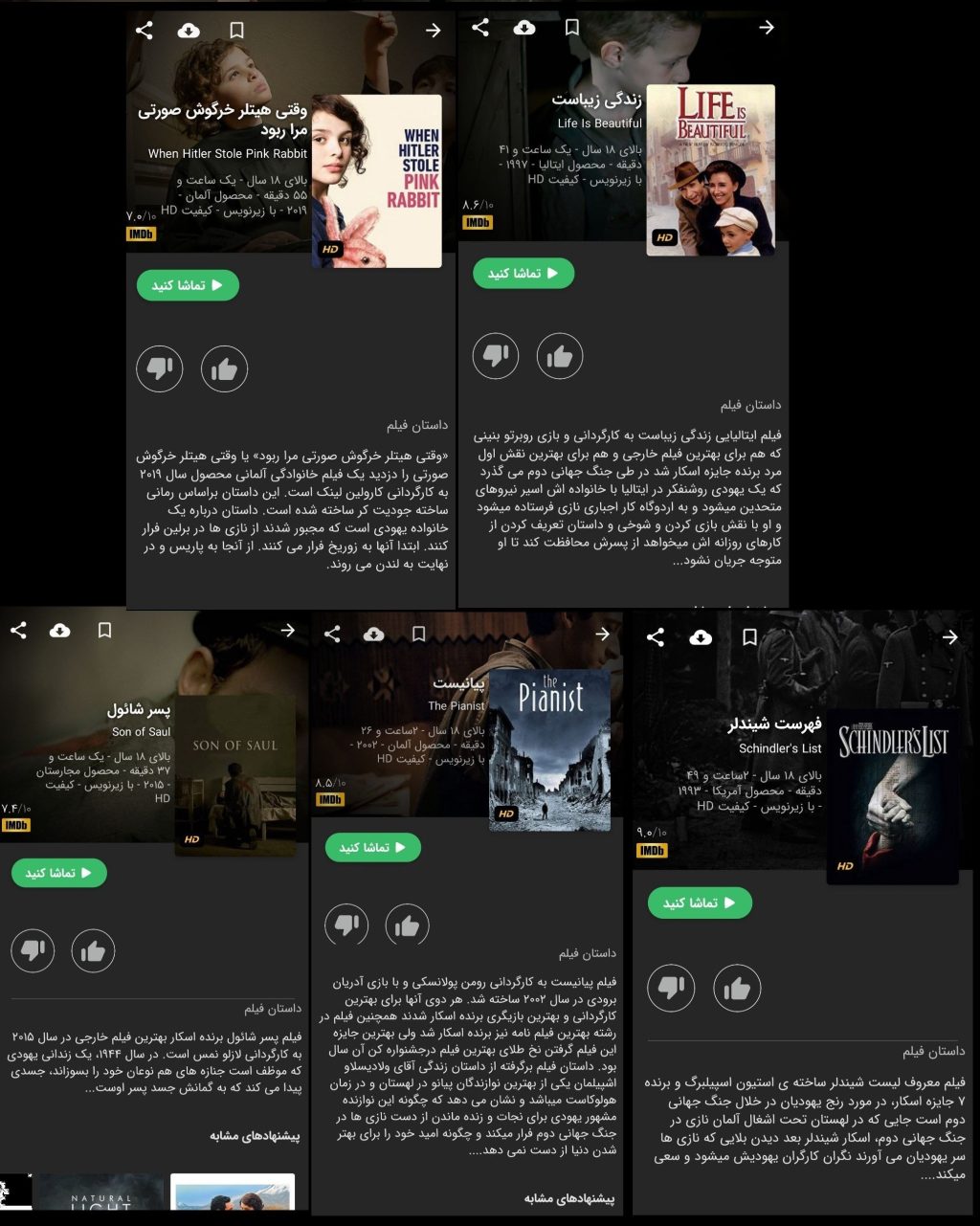
Critics argue that the platforms consistently feature foreign films with a shared thematic focus: the Holocaust and Jewish narratives. Notable titles include Son of Saul, Schindler’s List, The Pianist, Life Is Beautiful, and When Hitler Stole Pink Rabbit. These works, many directed by filmmakers of Jewish heritage, depict persecution during World War II and are seen by some as promoting a specific historical narrative.
🔗 بیشتر بخوانید: اولین تصاویر از «الگوریتم»/ سریالی امنیتی در راه تلویزیون_خبررسان
- Son of Saul (Hungary): Follows a Jewish prisoner forced to burn corpses, who seeks a proper religious burial for a boy he believes is his son.
- Schindler’s List: Chronicles Oskar Schindler’s efforts to save Jewish workers in Nazi-occupied Poland.
- The Pianist: Based on Władysław Szpilman’s survival as a Jewish pianist in Warsaw during the Holocaust.
- Life Is Beautiful (Italy): Portrays a Jewish father shielding his son in a concentration camp through imagination.
- When Hitler Stole Pink Rabbit (Germany): Depicts a Jewish family fleeing Berlin in the 1930s.
Expert Criticism: Lack of Regulatory Oversight
Prominent media figure Mohammad Reza Abbasi, speaking on the “Jam-e Jam” program, warned that platforms now distribute foreign content without rigorous scrutiny. He emphasized that this violates constitutional principles, the Leader’s directives, and policies from the Supreme Cultural Revolution Council — particularly regarding content promoting homosexuality, Christianity, U.S. military culture, or other values incompatible with Iranian-Islamic norms.
Abbasi noted that when platforms were launched, the government allowed foreign film distribution without licensing to support their growth. Today, virtually any global production, regardless of language or message, is accessible. He highlighted subtle but pervasive cultural shifts: looser dress codes, digitally altered facial features, and subtitles designed to convey explicit meanings even to non-English speakers.
🔗 بیشتر بخوانید: اغاز ضبط «قند پهلو» با ØضÙر ٠عاÙ٠سÛ٠ا_خبررسان
Accountability Gap
While platforms assume full responsibility for foreign content, no effective supervisory body currently monitors it. Abbasi stressed that criticism should target the Ministry of Culture and Islamic Guidance and the Supreme Council of Cyberspace, which granted these platforms operational autonomy. Domestic content faces relative oversight, but the vast majority of foreign material operates unchecked — a situation he described as a painful cultural transformation unfolding in real time.