Jamal Publications Unveils ‘Chat with Mr. Satan’ in New Languages at Tehran Book Fair
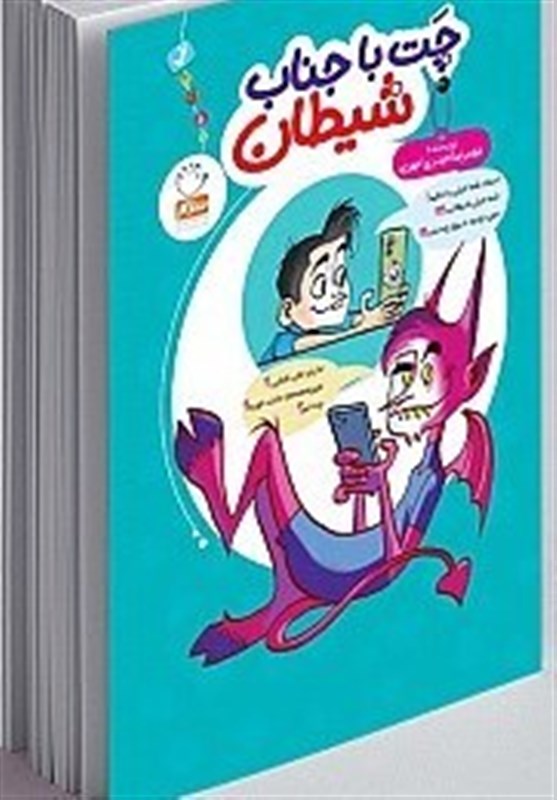
Hojjatoleslam Alireza Sabhani-Nasab, director of Jamal Publications, told Khabarresan that the publishing house is participating in the 36th Tehran International Book Fair with 50 new titles. In addition, the publisher will showcase 30 works translated into English and Arabic.
Sabhani-Nasab highlighted the translation of “Chat with Mr. Satan” as one of the featured projects. The book, previously rendered into Arabic, will now also be presented in an English edition at the fair.
🔗 بیشتر بخوانید: مقدار فروش فیلم های مستند در سینما حقیقت رکورد زد_خبررسان
Written by Gholamreza Heydari Abhari, “Chat with Mr. Satan” targets a teenage audience with a religious perspective. The author adopts a fresh, conversational style that resonates with today’s youth, guiding them through the temptations of Satan and the importance of faith in confronting them.
A distinctive feature of the work is its innovative structure. The narrative unfolds as an online dialogue between the author and Satan, a format that also influences the book’s unique page layout, setting it apart from conventional publications.
🔗 بیشتر بخوانید: روایت جنگ 12روزه در نخستین تکه های یک سریال_خبررسان
The 36th Tehran International Book Fair, running through mid-May at the Imam Khomeini Mosalla, hosts over 2,000 domestic publishers and numerous international exhibitors. Jamal Publications, known for its focus on religious and youth-oriented literature, occupies a prominent booth in the specialized publications hall.
Beyond “Chat with Mr. Satan,” the publisher’s new catalog includes titles addressing contemporary ethical challenges, Quranic studies for adolescents, and illustrated histories of Islamic civilization. Several works result from collaborations with scholars from Qom seminaries and university researchers.
🔗 بیشتر بخوانید: واگویه ای عاشقانه از سیره فاطمی در پردیس تئاتر تهران_خبررسان
Heydari Abhari, a prolific author of youth literature, has previously published “Dialogue with the Unseen” and “Footprints of Light” with Jamal Publications. His works consistently employ narrative innovation — screenplay formats, epistolary structures, and now chat-style dialogue — to engage readers accustomed to digital media.
The Arabic translation, completed by the Beirut-based Dar al-Kutub al-Ilmiyah, debuted at the Cairo International Book Fair earlier this year to positive reception. The forthcoming English edition, translated by a team affiliated with the Islamic College in London, aims to reach diaspora communities and Islamic schools in Europe and North America.
Industry observers note a growing trend among Iranian publishers to secure foreign language rights at Tehran’s fair. Last year, over 300 copyright agreements were signed, a 40% increase from the previous edition. Jamal Publications has active negotiations for Turkish and Urdu editions of several titles.
Visitors can attend a signing session with Heydari Abhari on the fair’s second Thursday, followed by a panel discussion on “Religious Narratives for the Digital Generation” featuring the author, child psychologists, and curriculum developers from the Ministry of Education.
Innovative Narrative Strategy Meets Traditional Values
The decision to frame a theological discourse as an instant-messaging conversation reflects a deliberate pedagogical strategy. Heydari Abhari explained in a pre-fair interview that the chat format mirrors the way teenagers actually communicate, lowering the barrier between religious concepts and lived experience. Each chapter corresponds to a “session” — topics range from “Why Does Evil Exist?” to “Digital Distractions and Spiritual Focus” — and employs emojis, timestamps, and read-receipt humor to sustain engagement without trivializing the subject matter.
Layout designer Maryam Kazemi described the production challenges: “We treated every page like a smartphone screen. Margins become notification bars; footnotes appear as pop-up tooltips. The typeface shifts between a clean Naskh for the author’s voice and a jagged, glitch-style font for Satan’s interventions.” The result is a hybrid artifact — part graphic novel, part theological primer — that has already attracted attention from curriculum committees in three provinces.
Translation as Cultural Bridge
The Arabic edition, titled “دردشة مع سيد الشيطان,” underwent theological review by Al-Azhar scholars before publication. Translator Hassan al-Masri noted that preserving the colloquial immediacy of the Persian original required inventing new Arabic chat idioms: “Classical Arabic lacks native equivalents for ‘LOL’ or ‘BRB,’ so we adapted Levantine youth slang while keeping the Quranic quotations in their revered register.”
For the English version, the Islamic College team faced a different dilemma: how to render distinctly Iranian cultural references — allusions to Ta’zieh passion plays, the poetry of Hafez, the architecture of Isfahan’s mosques — for a global Muslim readership. Their solution combines contextual footnotes with an appended glossary, and replaces some local metaphors with universally recognized Islamic motifs (the spider’s web from Surah Al-Ankabut, the whispering jinn from Surah An-Nas).
Market Dynamics at the Fair
This year’s Tehran International Book Fair has expanded its “Rights Center” into a dedicated 1,200-square-meter hall where agents from 40 countries negotiate translation licenses. Jamal Publications’ rights manager, Reza Farhadi, reported preliminary interest from publishers in Malaysia, Indonesia, and Bosnia for “Chat with Mr. Satan” and two other titles: “The Lantern of Reason” (a youth introduction to Islamic philosophy) and “Stories of the Companions” (graphic biographies).
Farhadi emphasized a shift in Iranian publishing strategy: “Ten years ago we exported mostly classical texts. Now the demand is for contemporary voices that speak to Gen Z Muslims in Jakarta, London, or Toronto. The chat format is exactly what foreign editors are requesting — they see it as a template they can localize.”
Educational Partnerships and Digital Extensions
Beyond print, Jamal Publications has partnered with the Ministry of Education’s “Roshd” digital platform to develop an interactive companion app. Students can “message” a moderated AI version of the book’s Satan character, receiving scripted responses that guide them toward Quranic verses and hadiths addressing each temptation. Pilot testing in 50 Tehran high schools showed a 37% increase in voluntary religious-study engagement compared to control groups using conventional textbooks.
The publisher also announced a collaboration with the Islamic Republic of Iran Broadcasting (IRIB) to produce a 12-episode animated series based on the book, slated for Ramadan 2025 broadcast. Character designs reuse Kazemi’s visual language, and Heydari Abhari serves as script consultant.
Critical Reception and Scholarly Debate
Not all responses have been uniformly positive. Conservative clerics in Qom have questioned whether the chat format risks normalizing casual discourse with evil. Ayatollah Mohammad-Taqi Mesbah-Yazdi’s office issued a cautious statement urging “discernment in pedagogical innovation lest the form undermine the gravity of the content.”
Reformist scholars counter that the book’s orthodoxy is unimpeachable — every theological claim cites established sources — and that the format simply meets youth where they are. Dr. Fatemeh Keshavarz, professor of Persian studies at the University of Maryland, praised the work as “a rare example of indigenous Islamic media literacy: it teaches teenagers to recognize manipulative rhetoric by literally putting the Tempter’s tactics on screen.”
Looking Ahead: Scaling the Model
Jamal Publications plans to extend the “Chat” franchise into a series: “Chat with the Prophet’s Companions,” “Chat with the Imams,” and a secular spinoff, “Chat with History,” covering figures from Avicenna to modern Iranian scientists. Each will maintain the messaging interface while adapting the visual vocabulary — medieval manuscript margins for the historical volumes, laboratory notebook aesthetics for the science edition.
Sabhani-Nasab revealed that the publisher is investing in a proprietary content-management system to streamline multilingual production. “We want to go from Persian manuscript to Arabic, English, Turkish, Urdu, and Malay epubs in under two weeks,” he said. “The Tehran Book Fair is our launchpad, but the real market is the global Muslim diaspora’s smartphones.”
As the fair enters its final days, Jamal’s booth remains crowded with school groups, families, and foreign rights scouts. A teenager scrolling through the Arabic edition on a demo tablet summed up the project’s ambition: “It feels like someone finally wrote a religion book that doesn’t talk down to me. It talks with me.”