The Glory and Beauty of the Prophet in the Mirror of Publishing – Khabarresan
According to a report by Khabarresan’s cultural correspondent from Tasnim, addressing the life of the Messenger of Mercy, the Prophet Muhammad (PBUH), for writers and poets is more than just a subject; it is a act of devotion and respect to the presence of a man by whose existence the world of possibilities came to life. Based on this premise, throughout various eras, diverse works concerning the era, life, and biography of the Messenger of God (PBUH) have been published, each attempting to address a dimension of his life. However, it appears that the primary focus of these works has been on rewriting the life and times of the Noble Prophet (PBUH), with less attention paid to recreating his life from various dimensions. Below is a review of 10 of the best books published in the Iranian book market in recent years:
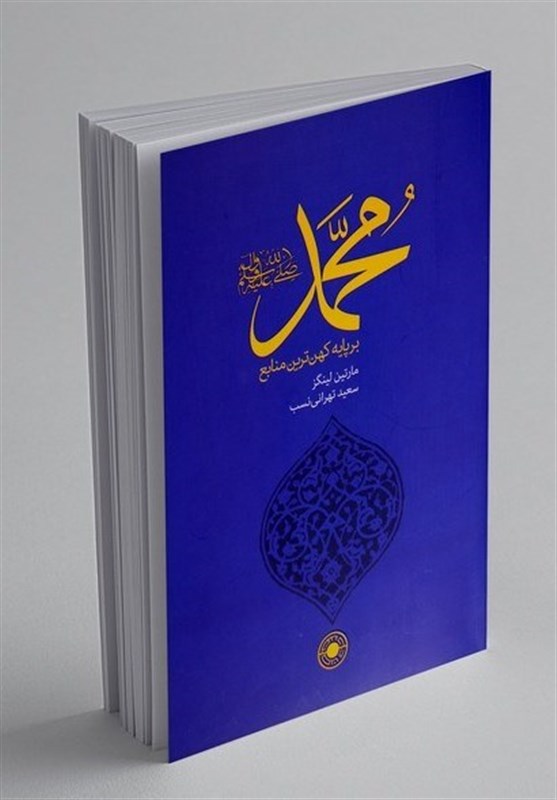
1. “Muhammad, Based on the Earliest Sources”
Since Martin Lings wrote “Muhammad, Based on the Earliest Sources” to this day, this work has attracted the attention of a vast global audience due to its captivating prose and exploration of various dimensions of the life of the Messenger of God (PBUH), to the extent that one might say the number of its readers in Europe exceeds the number of Muslims there.
🔗 بیشتر بخوانید: اغاز پخش فیلم های دنباله دار شبکه نمایش با ببرخیزان و اژدهای نهان_خبررسان
Although Lings has numerous works in literature, religion, and art, this book is his most famous work, for which he is primarily recognized. The publication of this book was welcomed by intellectuals and contemplative minds and has been translated into various languages including Spanish, French, Turkish, Arabic, and others. Lings’ book is also available in Iran with a translation by Saeed Tehrani-Nasab from Hikmat Publications, and in the 2010s (Iranian calendar 1390s) it was among the works that managed to attract the attention of the Iranian reading community.
The author covers the life of the Messenger of God (PBUH) from birth to demise in 85 chapters. In the narrative path Lings pursues, alongside the personality of the Prophet Muhammad (PBUH), various dimensions of his personal life (such as family, character, miracles, etc.), political and social events of the Prophetic mission and thereafter, wars and hardships the Noble Prophet (PBUH) endured to establish a religious community, and the problems he faced with the Arabs of the Ignorance era and the society built upon those beliefs, have been examined.
🔗 بیشتر بخوانید: اظهار تعطیلی روزهای سینما در هفته آینده_خبررسان
Among the reasons for the attention to Lings’ book is its simple prose, which can accompany a reader of any taste and knowledge level. The book lacks digression and, as far as possible, benefits from authentic sources. Although some critics have pointed out flaws in some of its discussions, such as whether Abu Talib believed in the One God or not. Some researchers consider the shortcomings to stem from the author’s one-sided view of certain historical propositions and believe its origin lies in Lings’ religious inclination.
Martin Lings was a Protestant Christian. He was born in England in 1909. In early youth, he left Christianity and, in a quest to discover the truth, engaged in extensive study of religions. During the years 1937-1938, as a result of interaction with Muslims, he became interested in Islam. He is known for a Sufi inclination and spent his life promoting a Sufi reading of Islam. Martin Lings dedicated his entire life to introducing and researching Islamic knowledge (certainly with a Sunni inclination) to the West.
🔗 بیشتر بخوانید: برگشت مجدد محمدرضا گلزار و تکرار یک سؤال_خبررسان
In a general view, Martin Lings was a prominent English traditionalist, Orientalist, writer, editor, translator, university professor, Arabist, and great poet whose works are entirely focused on the relationship between God and religious teachings, sacred texts, literature, and art. He studied English language and literature at Oxford and for consecutive years was responsible for the preservation of Eastern manuscripts and printed books at the British Museum, the fruit of which is a work such as the art of Quranic calligraphy and illumination. His works include: “The Book of Certainty”, “What is Sufism?”, “Religion in the Middle East”, “A Gnostic from Algeria”, and the book “Muhammad, Based on the Earliest Sources”.
*** “Qaf”
Another readable work in this field is the book “Qaf”, written by Yasin Hajazi. In this book, Hajazi narrates the life of the Messenger of God (PBUH) in a historical narrative line by drawing upon three ancient texts: “Surabadi’s Tafsir”, “Sirat Rasul Allah”, and “Sharaf al-Nabi”. Hajazi’s effort in writing this work is commendable; because beyond the copy-pasting seen in some ritual and religious works in recent years, he has extracted the narrative line of the life of the Noble Prophet (PBUH) from these three sources and, taking the historical sequence into account, established a rosary-like thread between them; for this reason, the reader does not encounter pauses or gaps in reading the work and perceives the text as unified. For this reason, some critics describe his work as a “collage” that blends various dimensions from these three works and breathes new life into them with an artistic perspective.
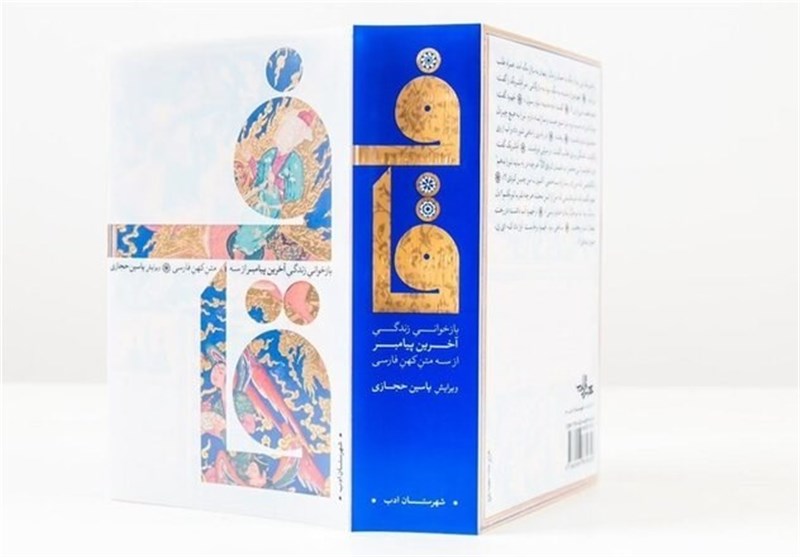
Hajazi insists in this book that “Qaf” does not contain the entire life of the Last Prophet of God (PBUH). “First, because the three ancient books that were the sources of this re-reading did not contain the entire Sira of the Prophet. Second, because the Prophet’s Sira – unfortunately – is a defective Sira. One cannot accept everything that has come under the Sira – though famous – as truth and consider it certain. Third, the editor has only been involved in bringing the dramatic elements of each event, not all events or even all aspects of a single event.”
The author’s attention to the dramatic dimensions of the Prophet’s life (PBUH) has made reading it engaging for the general public. However, the author has not sacrificed the content to an artistic view of events; to evaluate the content mentioned in the three important sources, he has also referred to other sources including the book “The Authentic Sira of the Great Prophet of Islam”, the translation of “Al-Sahih min Sirat al-Nabi al-A’zam (PBUH)” written by Sayyid Ja’far Murtada Amili.
*** “Three Priests”
Majid Qaisari is among the successful writers who in recent years have managed to attract readers with various political inclinations and beliefs to their works. His book “Three Priests” is among these works that, due to its subject and the author’s approach to this writing, can be considered one of the successful works in the field of narrative literature about the life of the Noble Prophet (PBUH).
The book narrates the story of the life of the Messenger of God (PBUH) from the perspective of Halima, his wet nurse, and the efforts of three priests to extinguish the light of Prophethood. The story enjoys great suspense due to the relentless efforts of these three priests who are insistent on their mission and pursue its execution without hesitation.
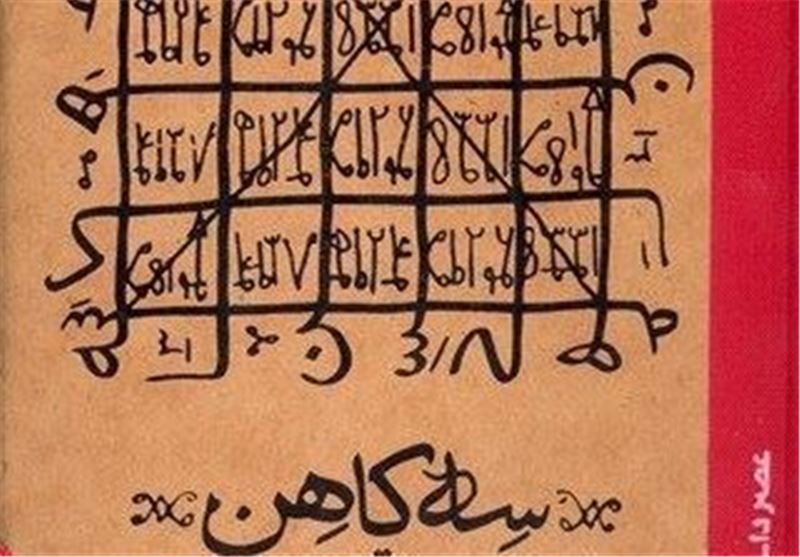
Among the narrative works written about the Noble Prophet (PBUH), unfortunately a significant portion has been devoted to rewriting the life of the Messenger of God (PBUH) and the history of early Islam. From this perspective, Qaisari’s book has a prominent distinguishing feature: the recreation of the narrative. He is a professional storyteller who has managed, with precision and focus on the margins of life, to create a creative, artistic, and literary narrative of the Prophet’s life (PBUH) despite all limitations and red lines.
*** “Muhammad”
It seems the 2010s (1390s) should be defined as the decade of creating creative works in the field of Prophetic literature. The book “Muhammad”, written by Ibrahim Hasan-Beigi, is among these works written by Ibrahim Hasan-Beigi and subsequently managed to attract the attention of European audiences with its English translation. The book was translated into various languages amidst the atmosphere of insults against the Messenger of God (PBUH) in Europe and succeeded in introducing part of the blessed existence of the Merciful Prophet (PBUH) to non-Muslim communities.
In the narrative of this novel, composed in 15 sections, a Jewish person who is introduced as a scholar is commissioned by the Supreme Jewish Council to go to the Prophet of Islam (PBUH) and, by feigning conversion to Islam, either kill him or challenge his beliefs.
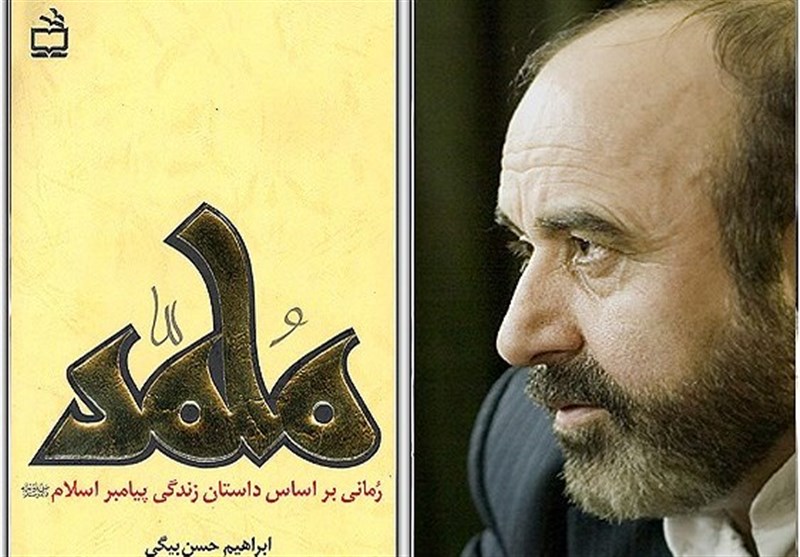
He went towards the Noble Prophet (PBUH) and sent 15 separate reports describing his life and activities to the Supreme Jewish Council, but after sending the fifteenth report, which took place during the illness and demise of the Noble Prophet (PBUH), he returned to his city and felt a sense of loss, finding his soul captive to the movement, words, and deeds of the Noble Prophet (PBUH).
He discovers that an event has occurred within him; specifically, he realizes that the head of the council, influenced by reading these letters and becoming acquainted with the conduct and character of the Prophet (PBUH), has openly inclined towards Islam.
*** “The Scent of the Muhammadan Flower”
But among the latest works published in the field of narrative literature with a focus on the life of the Prophet (PBUH), is the book “The Scent of the Muhammadan Flower”, written by Dawood Amirian. Amirian, better known to book lovers as a writer active in the field of Sacred Defense and satire, has succeeded in his first attempt in the field of religious literature.
The book “The Scent of the Muhammadan Flower” is, although a narrative of the life and blessed existence of the Noble Prophet (PBUH), a narrative from another angle of the lives of many human beings who were able to discern light and radiance from the dark world around them and move towards it. For narrating the life of the Prophet (PBUH), Amirian turned to his companions and narrated their lives from their perspective.
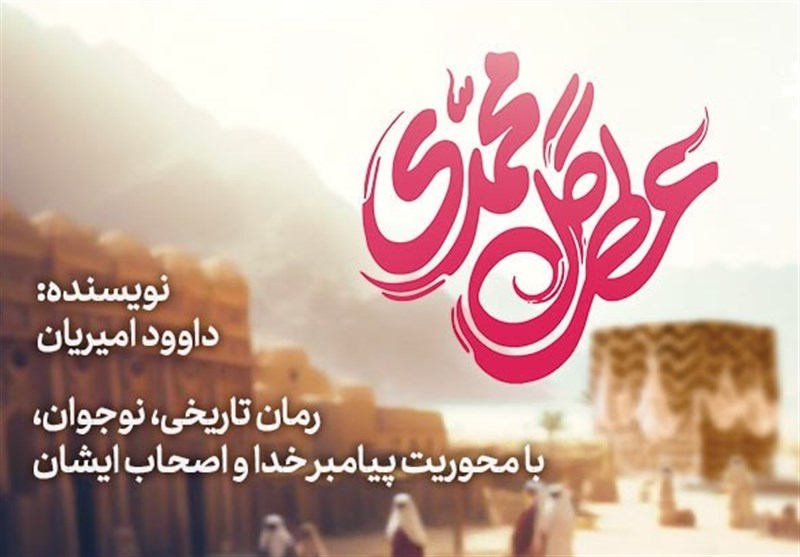
Amirian’s book is a fresh opportunity in young adult publishing from several aspects; first, the book has managed to present a straightforward and readable narrative of the life of the Messenger of God (PBUH) for young adult audiences with firm prose and attention to authentic historical and narrative sources; and this in conditions where the young adult book market is full of translated books that sometimes have no affinity with Iranian-Islamic culture. The noteworthy point is that the author, unlike many historical works, has refrained from using a self-invented prose that some writers employ.
*** “The Lady of Love”
The fulfillment of the mission of the Messenger of God (PBUH) would have been difficult without the blessed existence of the Lady of Love, Lady Khadijah (SA). However, there are few works that wish to address the role of this Lady in the history of Islam. Most published works only include historical narratives of her life, and less effort has been made to address her life, her role in establishing the religious government, and the passage of Muslims through the hardships of the early years of the Prophetic mission from a literary and artistic perspective.
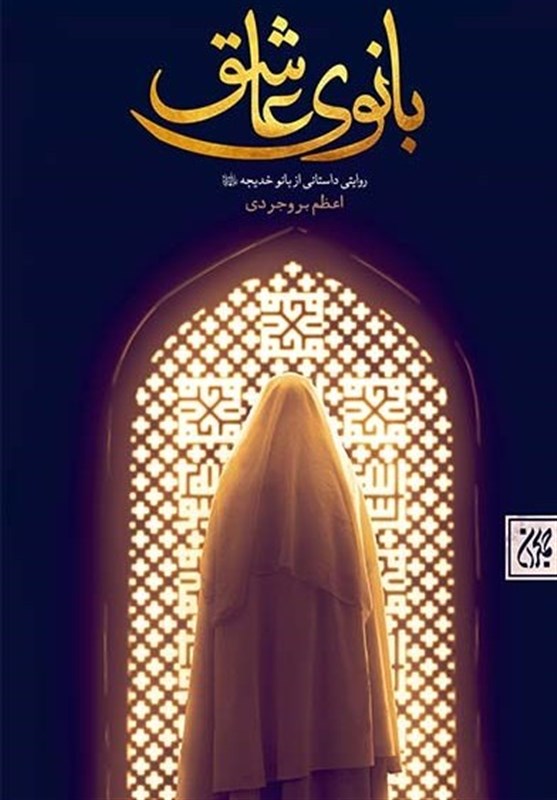
The book “The Lady of Love”, written by Azam Boroujerdi, attempts to portray the love between the Messenger of God (PBUH) and Lady Khadijah (SA). The novel “The Lady of Love” addresses a sensitive period of Lady Khadijah’s (SA) life; a period when she was at the peak of glory, majesty, and wealth, considered an influential lady in Mecca, and all nobles and elders desired to marry her. They came from the farthest points of the Arabian Peninsula to propose to her, but this great lady had her eyes on a specific, heavenly person; the one who was the most perfect human on earth; the same one who was the interpretation of her wondrous dream.
*** “Hopeful of Meeting”
“Hopeful of Meeting”, written by Maryam Sharif Razavian, is among the works that creatively and indirectly address the Sira of the Noble Prophet (PBUH). The author, in this book, by centering the life of “Ishtaq” (Longing), a pagan woman who decides to migrate to save her daughter’s life and becomes a neighbor of Lady Fatimah (SA), attempts to address the difference between the Islamic view and the Ignorance culture towards women.
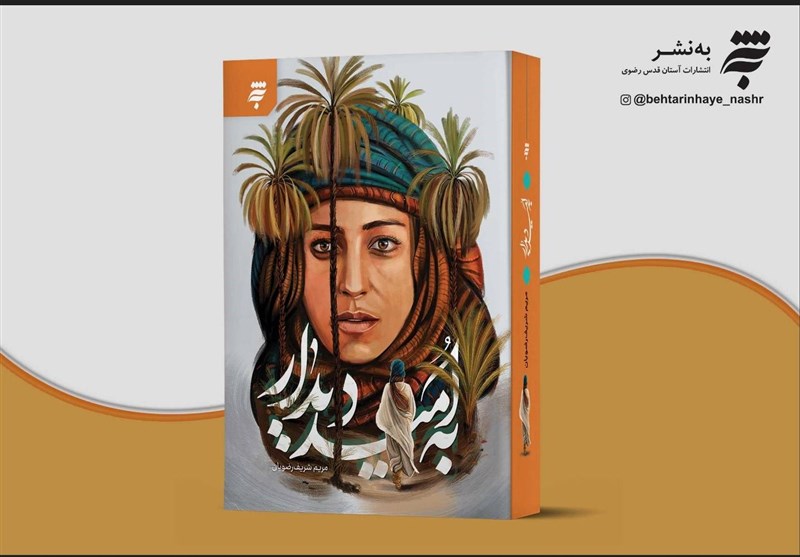
The reader, while becoming acquainted with Ignorance traditions in this book, realizes how important this work is in understanding how the advent of Islam transformed the destiny of thousands of women in the Arabian Peninsula and then the world.
The book is categorized among historical and religious works and covers the time span from the Prophet’s migration (PBUH) to his demise. The author simultaneously advances two types of emotional and historical narrative in this work. The simple yet captivating language, and on the other hand, Sharif Razavian’s success in characterization, have caused the book “Hopeful of Meeting” to become one of the readable narratives about Lady Fatimah (SA) and the Messenger of God (PBUH).
*** “Thirty Days with the Prophet (PBUH)”
The children and young adult publishing market is full of religious works; however, there are no few books that, with a superficial view, without considering artistic and literary subtleties, narrate the life of religious elders for this group of audiences.
The book “Thirty Days with the Prophet (PBUH)”, written by Hossein Fatahi, is among the successful works of recent years for introducing the blessed existence of the Messenger of God (PBUH) to child audiences. This book narrates the life of the Noble Prophet (PBUH) from birth to the time of his demise. The book contains 365 short stories from various parts of his life, each referring to a part of his Sira.
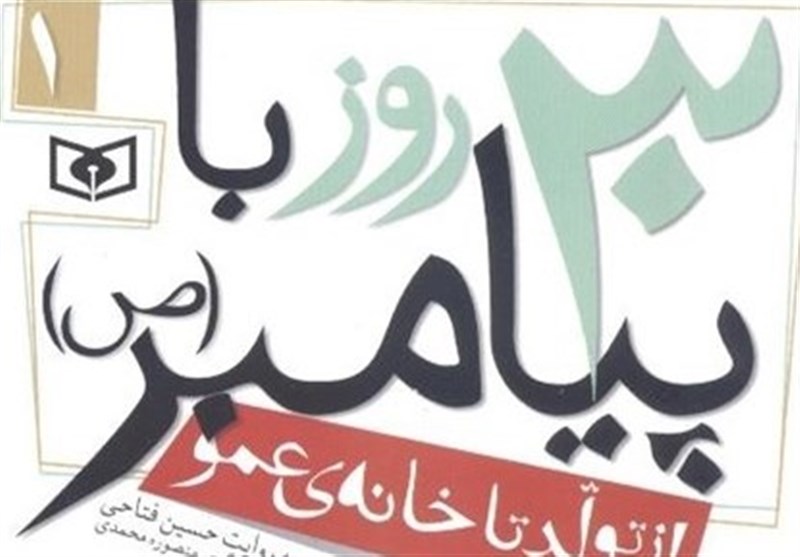
According to the author; an effort has been made in this book to show all dimensions of his life for the young adult audience. Living among people and family, livelihood, struggle, patience and perseverance in life and in the path of God, work, his Sira during travel, conversation with friends, and … are among the topics addressed in this book. The breadth of topic and title selection has been attempted in such a way that ultimately the book portrays a good overview of his life for the audience; for this reason, topics include social, economic, family, and … discussions and include both his individual and social life.
End of article/