Al-Aqsa : a 40
According to Khabarrossan, hours after the official announcement of the martyrdom of Yahya Sinwar, the leader of Hamas, news of the publication of the Persian translation of this Palestinian martyr’s novel “Thorns and Carnations” spread across the cultural pages of media outlets.
Before the news of Sinwar’s martyrdom broke, few knew that the leader of Hamas was a prolific writer. During his 22 years of imprisonment in Israeli jails, he wrote the novel “Thorns and Carnations” in Hebrew and translated five books from Hebrew and English into Arabic, ranking among the most prolific prisoner-writers in history. But what kind of book is “Thorns and Carnations” and how did the Hamas leader write it?
🔗 بیشتر بخوانید: بررسی کتابی درباره اهمیت همدلی به عنوان مهارتی تمدنساز
Yahya Sinwar is a pivotal figure in Palestinian politics, known for his leadership in Hamas and his influential role in the ongoing confrontations with Israel. His experiences during his imprisonment shaped his perspectives and strategies, which are eloquently expressed in the book “Thorns and Carnations.” This insight is crucial for understanding the complexities of the Palestinian struggle. As events in the Middle East continue to evolve, Sinwar’s actions and philosophies remain vital to the narrative of resistance and self-determination in the region.
“Thorns and Carnations” is not merely a narrative work but a profound testament to the enduring spirit of Gaza. Written by Yahya Sinwar from within the shadows of Israeli prisons, this narrative transcends traditional storytelling to offer a raw, unfiltered perspective. In its 30 chapters, the novel also depicts the difficult choice of some Palestinian refugees to work in Israel. Some saw it as an opportunity to improve their families’ living conditions, while for others it was nothing short of treason.
🔗 بیشتر بخوانید: رمان کودک و نوجوان دچار پیروی و خالی از ویراستاری_خبررسان
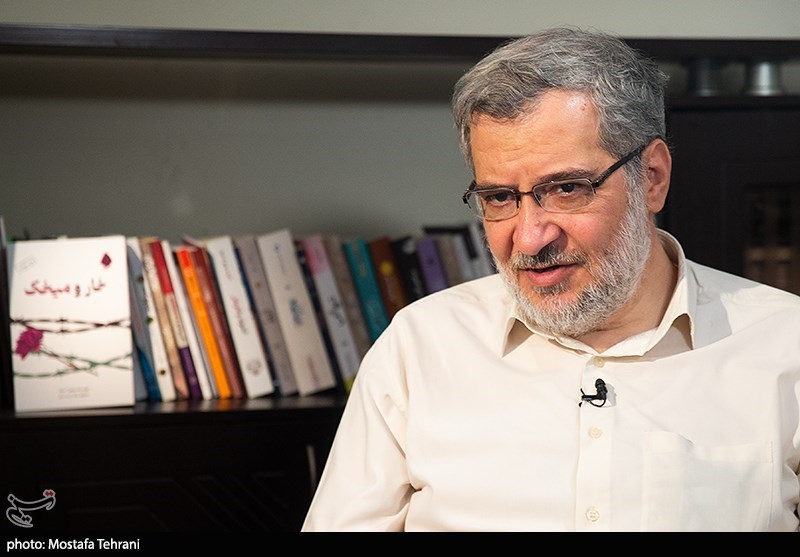
Karim Shani, a professor of Persian language and literature, undertook the Persian translation of this book, which was published by Nistan Adab Publications with copyright fees paid to Hamas.
Karim Shani is a poet, writer, translator, and scientific secretary of the Tamas Literary Agency. His works include “Descriptive Bibliography of Persian Grammar,” “Encyclopedia of Syria,” “Publishers of Damascus and Iraq,” “Defense of the Sanctity of Imamate and Wilayah,” “Sarv and Soroud” (translation of 40 odes by Arab poets eulogizing Martyr Soleimani into Persian), “Khoon-e Zendan” (translation of the novel “Habs al-Dam” by Syrian writer Nizar Saleh), “Elah-e Ghoroub” (translation of the novel “Chalma” by Nizar Tarboush), “Global Colonialism: France” (analytical history of French colonialism in the words of the Supreme Leader, published in Beirut), “History of Samarra,” and others.
🔗 بیشتر بخوانید: گل یا پوچ: سرگرمی جدید با طعم خنده و چالش در فیلیمو!
On the occasion of the book’s publication in Iran, Khabarrossan conducted an interview with Karim Shani via Tasnim. In this conversation, Shani referred to the role of resistance in the lives of Palestinian heroes and enumerated the prominent characteristics that Martyr Sinwar possessed in his life, which led to such a destiny. The following is the text of the Tasnim interview with this translator:
* Tasnim: The martyrdom of Yahya Sinwar, at a time when Israel’s successive attacks and the martyrdom of resistance leaders had created a sense of anxiety and even despair among supporters of the Palestinian cause and resistance, was like the rising of the phoenix from the fire. It not only revived hope but also created a heroic spirit in the hearts of resistance fighters and supporters worldwide. Please share your perspective on Sinwar’s martyrdom?
Resistance fighters are born into martyrdom and live with martyrdom; martyrdom is not a strange or wondrous affair for them, especially Sinwar, who witnessed the martyrdom of many friends and loved ones throughout his life. Even the book “Thorns and Carnations” can be considered an album of resistance martyrs. If you have read the book to the end, you will see that Sinwar even predicted the manner of his own martyrdom in this novel. Compare the location of his martyrdom, the filming of the moment of martyrdom, etc., with the scene he described at the end of the book, and you will see many similarities and few differences. Sinwar predicted this type of martyrdom in 2004.
Heavier than this event is the fact that the most beautiful style of martyrdom can be seen throughout his life. If you read his life story, you witness heavier events and occurrences. Sinwar has been familiar with all the violence of war and siege in Gaza since his youth. Reading the book reveals that Sinwar’s manner of martyrdom, while making him a hero in the eyes of the world, was not unprecedented in his life. He endured hardships, problems, epics, and battles beyond imagination, and this spirit existed in all these Gaza events and the siege that intensified from 1948. Sinwar was a fighter engaged in intelligence work. He was very precise and was imprisoned several times, but he was always an inspiring element, just as he demonstrated in his martyrdom. He constantly breathed spirit into the struggle and never surrendered in any situation. He always sought different solutions to escape dead ends.
The book clearly shows that he acted as a motor pumping morale into the Palestinian nation.
From another perspective, the strategy of the Al-Aqsa Flood operation was designed on the basis that martyrdom must be given for victory to be achieved. They knew what Israel’s strategy was; they knew it would commit massacres so that the mujahideen would lay down their arms. Not only did he accept this himself, but a nation and an Ummah accepted that this is how they would go to battle. The resistance fighters chose their path: the path of martyrdom. Not only the mujahideen had this choice, but the people chose the same. The faces of resistance also went pale before their people with their martyrdom, because a Muslim commander is first a trailblazer himself. They knew that the cost of preparing these weapons was their own martyrdom, and indeed its effect was realized. This is how Hezbollah was different before the martyrdom of Sayyed Hassan and then after the martyrdom of Sayyed Hassan.
Hamas Transformed Thoughts for the Al-Aqsa Flood Operation 40 Years Ago
* Tasnim: Yahya Sinwar can perhaps be called the most unique resistance hero, because we are faced with a human being with multiple personalities. On one hand, we face a tireless mujahid who spent 22 years in Israeli prisons, mastered the Hebrew language, and virtually attended Israeli university courses to know the enemy from within. This dimension reflects a steadfast, solid, military, and political resistance figure. On the other hand, we face a human being who uses literature to express his words; a man of culture, art, and thought; he writes novels and translates books, all within the heart of prison, amidst blood and torture. Here we face a literary and certainly emotional personality who is above all a free human being. Which dimension of his personality is more reflected in this novel?
When we read the novel, we see that all these thoughts have gathered in it. Nothing unexpected or unforeseen is seen. This novel has actually been interpreted; meaning the external reality has manifested. The external realization of this novel becomes the Al-Aqsa Flood itself. This novel was written 20 years ago; writing it took 20 years. But this thought has roots from 40 years ago. This thought, whose crystallization we saw in Al-Aqsa Flood, gathered particle by particle; culture was built for it and forces were nurtured. Instead of collecting war equipment, they began transforming thought, digging more and deeper tunnels, and collecting more weapons.
Regarding Sinwar’s subtle personality, it must be said that this is essentially the nature of the Islamic movement. The mujahideen of the Islamic movement have this subtle nature in jihad; they do not fight for power-seeking or conquest; they have a pure spirit and a subtle, faithful, and metaphysical heart. They struggle and wage jihad by divine words. It is possible that their activity appears violent outwardly; but inwardly, a strong spirituality exists in their being. This subtlety and existential spirituality, coupled with struggle, might seem like a contradiction to an individual lacking faith capacity; but for an individual with even the slightest faith capacity, it is natural. Indeed, the truth of heartfelt belief can be seen in resistance mujahideen who sacrifice everything for the Cause. The peak of spiritual subtlety can be observed in resistance mujahideen. Overall, if we want to examine this from the perspective of jihadi psychology, the subtlety that exists in the spirit of mujahideen cannot be seen in the spirit of any other individual. When you read the novel, you encounter the most subtle scenes of life in a mother’s embrace, beside family, and so on. You cannot believe that human beings who have been in this much hardship for years, under the shadow of war for years, can be this tender-hearted. For individuals who see war as black and are familiar with anti-war literature, this type of literature is shocking, because the literature of defense and resistance is not compatible with their criteria.
“Thorns and Carnations” is the Story of Hamas’s Birth
* Tasnim: Given that the book narrates from the first steps of the formation of resistance in 1967 to the stages of growth and maturity in the first Palestinian Intifada or the Stone Revolution in 1987, can it be considered a history of resistance?
A review of the history of Palestine and resistance shows who the Palestinians were followers of before: Yasser Arafat. What thoughts did Yasser Arafat have? Their idea was that either the West must do something for Palestine or the East, and they themselves could not advance anything; until Hamas was formed. Essentially, “Thorns and Carnations” is the story of Hamas’s birth.
The Important Achievement of Al-Aqsa Flood Was Global Awakening
Al-Aqsa Flood and the martyrdom of Yahya Sinwar were the fruit of a thought that was probably planted 40 years ago in this region, and everyone was waiting for it, and it had to happen. You know that the important impact of Al-Aqsa Flood was global awakening. This awakening is so important that Hussein (AS) also sacrificed his blood to awaken the people.
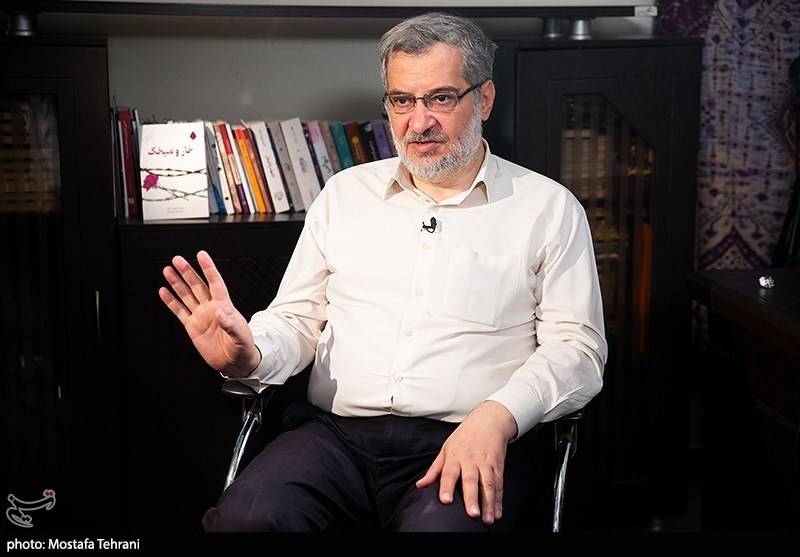
The “Tamas Agency” office began the translation of the book “Thorns and Carnations” with the permission and coordination of the Hamas office. There are other books by this individual as well; this is one of them. In my opinion, this collection can have a historical narrative. You know that the best historical impact published is a work in which the author has been present. Yahya Sinwar was present from the very beginning of Hamas’s activity, and when he narrates these historical events, he narrates as a real observer. The novel was merely a tool for narrating the history of Palestine. Because Sinwar had a subtle personality, he chose the template of literature.
When you read the book, if you are a Palestinian, you understand all the author’s allusions to historical events, characters, etc.; but if you are not a Palestinian, questions and ambiguities arise for you. For this reason, I placed about 250 footnotes in the book. For example, when a character named “Yahya” is introduced in the book, it must be clarified for the audience that “Yahya Ayyash” is meant. This is completely obvious to Palestinians, but not to us. I introduced this character in the book; I also attached his photo. Therefore, if someone reads this novel, they will understand the entire West Asian conflict like a textbook—what the dispute is about, where it started, and so on. Studying this book can be equivalent to passing a 4-credit course on the history of Palestine.
Another book is “Diary of Hamas” (Yawmiyat Qassamiyya), which includes documents about Hamas. In translating the book “Thorns and Carnations,” I benefited greatly from these documents and explained many points from them in the footnotes in a documented manner, for example, what Sinwar meant by this event or this person and this story, and to which historical event he is referring, and so on.
* Tasnim: In your opinion, is this book more a history of Palestine and the story of Hamas?
Yes, this book is the story of Hamas. Hamas is a new idea in opposition to two major currents in the Islamic and Arab world: Salafi Islam and Western-oriented Islam. Sinwar criticizes these two currents in various parts of the book. In the dialogues of his characters in the novel, he speaks his mind; a new guideline that has emerged from pure Islam and opposes the world of arrogance and Marxism, Arab nationalism and Arab racism, American Islam, etc. The book was written for this very reason. The history of Hamas is like the arrow Rostam shot into Esfandiar’s eye; with one arrow, it targets two marks: the nationalism that fell into the lap of communists, and Western Islamism supported by America and arrogance. With one arrow, it blinds both eyes.
The World Lived in an Illusion About Palestine Before Al-Aqsa Flood
* Tasnim: In your opinion, why did Israel fear “Thorns and Carnations” so much that the book was removed from Amazon after a short time?
I came to know Palestine differently through this novel. Because almost no content has come out of the truth of Palestine in these years. The world has been living in an illusion about Palestine. I had previously studied and translated books about Palestine and the Hamas movement. I knew many details about Palestine, but when I read the novel, I saw that I knew nothing. This is a historical novel that, instead of dealing with the history of kings and the powerful, addresses the history of the people and the underprivileged society. Terminologically, its language is the language of common humanity.
What do you think shook Europe? Seminars? Conferences? Or books? No; the very images that came out of Gaza and the crimes of the Israelis did it all. Sinwar had also created visualizations in his novel that did the job; that is why the Zionists quickly removed the book from the market and Amazon. He had written those images to make an impact.
* Tasnim: Some compared him to Che Guevara after his martyrdom; but Che Guevara was a completely military and violent figure. It seems this comparison is incorrect and the emergence of such heroes is only possible in the heart of sacred resistance.
Che Guevara is a communist; he does not accept God, but he has shown human subtlety. He is a young doctor fighting for his nation against arrogance. The inner void of God in him diminishes him. Belief in God is a great part of human existence. When you take God away from a human, nothing remains; it makes him a broken character. That is why Imam Khomeini (RA), to save the communists (during the collapse of the Soviet Union), referred them to religious sources and mystical beliefs (the works of Ibn Arabi).
Comparing Sinwar with Che Guevara Ignores Sinwar’s Divine Thought
Yahya Sinwar outwardly looks like a guerrilla fighter; a guerrilla fighting for his nation; from this dimension, he can be like Che Guevara; but his inner truth is what Hamas was launched for. The Muslim Palestinian people realized that communist movements could not do anything for the Palestinian nation. From the moment they laid down their arms and signed the Oslo compromise agreement, the Muslim Palestinians said: We do not allow it. The seed of Hamas was sown here. Those who compare Che Guevara with Sinwar ignore the important difference between Sinwar and Che Guevara, which is the divine thought, monotheistic ideal, and religion. This comparison is a comparison between earth and sky. It seems both are fighters; but the inner self and motivation are very different.
Previously, Westernized intellectuals also made similar comparisons between Martyr Chamran and Che Guevara. In the past, our thinkers fell into the trap of communism, but now that the world has recognized the nature of communism, having this view is very superficial. If we align the totality of Sinwar with the totality of Che Guevara, it is a reduction of Yahya Sinwar’s personality. If you compare the keywords of these two, you will understand the depth of meaning and concept of jihad in the view and thought of Yahya Sinwar. However, Che Guevara was seen among a very different crowd; but around Sinwar, there were so many stars, before and after, that he did not find the time to stand out. From another perspective, the humility and modesty of Islamic culture prevented it. Sinwar was not a show-off.
Muslim Arabs Have Been Defeated in Soft War
* Tasnim: Among Sunnis, Jerusalem holds a high status. Palestine is the land of the Prophets (PBUH) and the first Qibla of Muslims. If Sunni rulers want to look at the Palestinian issue only from the sacred aspect they believe in for this region, they must be even more zealous about this land.
Yes, look, Muslim Arabs have been defeated in soft war. The onslaught of Western culture and, in contrast, Eastern Marxist thought, have distorted the Muslim Arab. Sinwar also has no tension with any Islamic sects, except the version of Western and Eastern Islam presented by Arab leaders. The version of Islam these leaders have presented is an empty version of Islam.
Shia jurisprudence, based on the jurisprudence of Ahl al-Bayt (AS), does not accept fighting to usurp a land. If that were the case, Islam would have conquered the world. Islam is the religion of mercy. Islam only permits defense and in fact has made it obligatory, but that Arab nationalist zeal is also of no use in this matter. Israel destroyed Arab zeal in six days. Why? Because with that same Western and Eastern cultural root, it had lost its strategic backing; it had even lost its human depth!
In the history of Palestine, Yasser Arafat was not formally a leftist; other leftist groups existed that launched the PFLP (Popular Front for the Liberation of Palestine) together, and then “Fatah,” which was a coalition of the PFLP and its core, was launched. When they committed that major mistake in the Oslo Accords, Sheikh Ahmed Yassin and the Muslim Brotherhood and the Muslim community saw that this group chose compromise; meaning the same path Anwar Sadat took in Camp David. They said: No. This is how Hamas and Islamic Jihad started. Hamas issued its first statement. I brought this statement in one of the footnotes of the translation of the novel “Thorns and Carnations.” In the first Intifada, the Stone Intifada, Sheikh Ahmed Yassin issued the statement of Hamas’s formation. Yahya Sinwar at that time had a group called “Al-Majd” tasked with copying and distributing this statement.
In the novel, the main character, Ibrahim, also undertakes this task, but in the real world, Yahya Sinwar did it. With the formation of Hamas, Palestinians showed that only the version of Islam can form resistance; certainly Islam that seeks martyrdom, which operates as a martyrdom-seeker, is very different from the suicide operations that the Taliban or ISIS seek. Indeed, the emergence of Hamas and Palestinian resistance was a cause for people to see and have a comparison between this luminous and ideal method and the tragedies ISIS created, or the tragedies the Taliban create in Afghanistan. Where is the Salafis’ thought and where is the thought of those who march towards the enemy in West Asia? Where is the subtle spirit of Palestinian fighters and where is the spirit of ISIS and the Taliban?
* Tasnim: The specific manner of Sinwar’s martyrdom is very suitable for creating a dramatic work and visualization. In the novel, we also encounter innovative visualizations. How much potential does this novel have to be turned into a play and form theatrical projects?
From the beginning, Yahya Sinwar’s decision was to write a screenplay; he did not intend to write a novel. As the work progressed, he saw it was better to write a novel. In the publisher’s preface, it is mentioned that they hope the novel will be turned into a film. Certainly, I deleted this preface because of the historical errors it contained.
The Hamas group, which has been behind the publication of this book, must also have a plan to make a film. The structure of the novel is also more like a screenplay. For example, connections are not linear. Locations are described, and… These cuts in the novel are for this reason: it was initially decided to be a documentary and later compiled into a novel; for this reason, dramatic spaces are sought.
* Tasnim: Besides the oral history of Palestine, the book also contains a kind of ethnography and sociology regarding Palestinian society. Israelis themselves have an admission: before Al-Aqsa Flood, they said that among our enemies, two people know us well: one is Sayyed Hassan Nasrallah and the other is Yahya Sinwar. Martyr Hassan Nasrallah had apparently studied a thousand Hebrew and Israeli topics monthly and had complete mastery, both cultural/social and political. Martyr Sinwar also, after being imprisoned, learned Hebrew starting from newspapers and then moved to books…