The Razor’s Edge: Modern Man’s Bewilderment Confronting Mortality
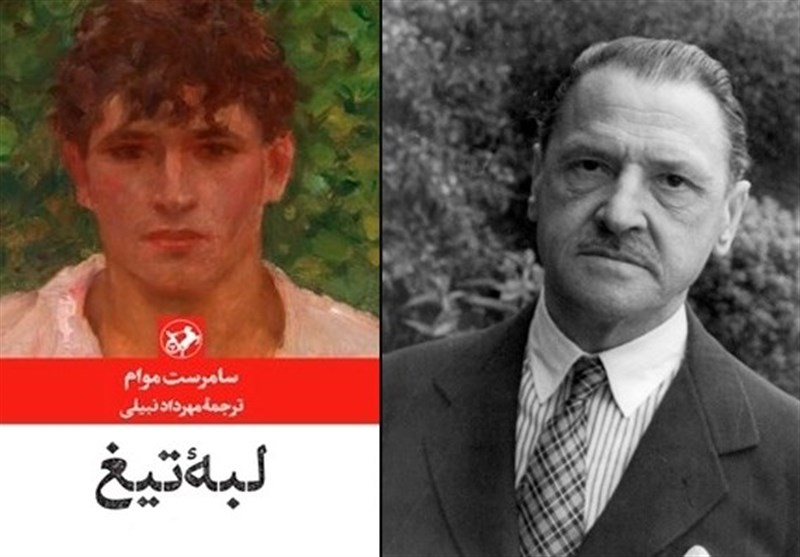
According to Khabarresan, the novel “The Razor’s Edge” by W. Somerset Maugham, translated by Mehrdad Nabavi, has recently reached its thirteenth edition published by Amirkabir Publications. This work is among the older titles of Amirkabir, originally issued in pocket format and reaching its third printing in 1972.
Plot Overview
The story follows a young man whose close friend dies in World War I. This loss triggers a profound spiritual transformation, propelling the protagonist on a quest to answer fundamental questions: What is the purpose of life? Why does death exist? Why is there suffering? Where is God, and which faith should one embrace? To find answers, he embarks on a global journey that combines physical discipline with the pursuit of wisdom and mystical insight.
🔗 بیشتر بخوانید: تل آویو سقوط کرد، آرزویی که اکنون به حقیقت می پیوندد_خبررسان
Author Background
Maugham (1874–1965) was born in Paris while his father served at the British embassy. He moved to Paris permanently in 1927 and died there. Though trained in medicine, he abandoned it for writing, and his own restless spirit mirrors that of his characters. “The Razor’s Edge” was first published in 1944.
Cultural Contrasts
The novel’s characters hail from America, England, and France, allowing readers to observe Anglo‑Saxon culture alongside other European traditions. Through the travels of the central figure, Larry, the narrative also juxtaposes Western civilization with the broader East, making cultural comparison a recurring motif.
🔗 بیشتر بخوانید: کتاب کودک؛ گنج نهان ایران در بازارهای جهانی نشر_خبررسان
Philosophical Core
For Larry, ultimate fulfillment lies only in a spiritual existence. Maugham himself identified with those who seek meaning beyond material concerns.
Historical Setting
The opening sections take place in the post‑World War I era, capturing America’s rapid expansion and the subsequent Great Depression (1929–1933). Maugham portrays both the pre‑crash illusion of an earthly paradise and the shattered dreams that followed. The decline of English society is another theme woven into the Anglo‑Saxon cultural backdrop.
🔗 بیشتر بخوانید: روایتی که دل را میلرزاند_خبررسان
Narrative Technique
Maugham presents the tale as a factual account, though he changes names to protect real individuals. The narrator — Maugham himself — moves between England, France, and America, recounting events he witnesses and supplementing gaps with imagination. The novel is structured in seven major parts, each containing several chapters.
Excerpt
“You will not succeed. You cannot understand that Larry is now in the grip of one of the most powerful emotions a human heart can harbor.”
“You mean he’s fallen in love?”
“No. Love is nothing compared to what I mean.”
“What then?”
“Have you ever read the New Testament?”
“I think so.”
“Remember how Christ was led into the wilderness and fasted forty days? When hunger seized him, the devil appeared and said, ‘If you are the Son of God, command these stones to become bread.’ Christ resisted. Then the devil set him on a temple pinnacle and urged him to throw himself down, knowing angels would catch him. Again Christ refused. Next the devil showed him all the kingdoms of the world, offering them if Christ would worship him. Christ replied, ‘Away from me, Satan!’ The Gospel of Matthew ends there, but the encounter continues. The devil returns: ‘If you accept disgrace, torture, a crown of thorns, and death on a cross, you will redeem humanity, for no greater love exists than laying down one’s life for friends.’ Christ failed. The devil laughed until his sides ached, foreseeing the atrocities humanity would commit in the name of salvation.”
Isabel glared angrily. “Where did you get this story?”
“Nowhere. I just invented it.”
“It seems blasphemous and foolish to me.”
The thirteenth Amirkabir edition, translated by Mehrdad Nabavi, spans 556 pages, with a print run of one thousand copies and a price of 460,000 tomans.